
For four centuries, we have been told a story: that William Shakespeare of Stratford-upon-Avon was the solitary genius behind the world’s greatest plays and poetry. It’s a compelling narrative, but it rests on a profound paradox.
The works demonstrate an impossible range of expert knowledge, while the historical record of the man from Stratford reveals a striking absence of the very things we would expect from such a genius.
This isn’t a call to dismiss genius, but to redefine it. What if the greatest literary genius was not a single individual, but a collective? Welcome to the Group Theory.
For four centuries, we have been told a story: that William Shakespeare of Stratford-upon-Avon was the solitary genius behind the world’s greatest plays and poetry. It’s a compelling narrative, but it rests on a profound paradox.
The works demonstrate an impossible range of expert knowledge, while the historical record of the man from Stratford reveals a striking absence of the very things we would expect from such a genius.
This isn’t a call to dismiss genius, but to redefine it. What if the greatest literary genius was not a single individual, but a collective? Welcome to the Group Theory.
For four centuries, we have been told a story: that William Shakespeare of Stratford-upon-Avon was the solitary genius behind the world’s greatest plays and poetry. It’s a compelling narrative, but it rests on a profound paradox.
The works demonstrate an impossible range of expert knowledge, while the historical record of the man from Stratford reveals a striking absence of the very things we would expect from such a genius.
This isn’t a call to dismiss genius, but to redefine it. What if the greatest literary genius was not a single individual, but a collective? Welcome to the Group Theory.
The traditional narrative asks us to accept that one man possessed an almost supernatural breadth of expertise. The plays themselves are the primary evidence for this problem.
The traditional narrative asks us to accept that one man possessed an almost supernatural breadth of expertise. The plays themselves are the primary evidence for this problem.
Law
Aristocratic Life
Italy
Classical Literature
Precise legal terminology and courtroom procedure in The Merchant of Venice and Measure for Measure.
Intimate knowledge of courtly intrigue, hunting, falconry, and the mindset of nobility in King Lear and Hamlet.
Specific, accurate details of Italian cities like Venice, Verona, and Padua in Othello and Romeo and Juliet.
Deep familiarity with Ovid, Plutarch, and Seneca, often referencing texts not yet translated into English.
- Law
- Aristocratic Life
- Italy
- Classical Literature
- Precise legal terminology and courtroom procedure in The Merchant of Venice and Measure for Measure.
- Intimate knowledge of courtly intrigue, hunting, falconry, and the mindset of nobility in King Lear and Hamlet.
- Specific, accurate details of Italian cities like Venice, Verona, and Padua in Othello and Romeo and Juliet.
- Deep familiarity with Ovid, Plutarch, and Seneca, often referencing texts not yet translated into English.
Law
Aristocratic Life
Italy
Classical Literature
Precise legal terminology and courtroom procedure in The Merchant of Venice and Measure for Measure.
Intimate knowledge of courtly intrigue, hunting, falconry, and the mindset of nobility in King Lear and Hamlet.
Specific, accurate details of Italian cities like Venice, Verona, and Padua in Othello and Romeo and Juliet.
Deep familiarity with Ovid, Plutarch, and Seneca, often referencing texts not yet translated into English.
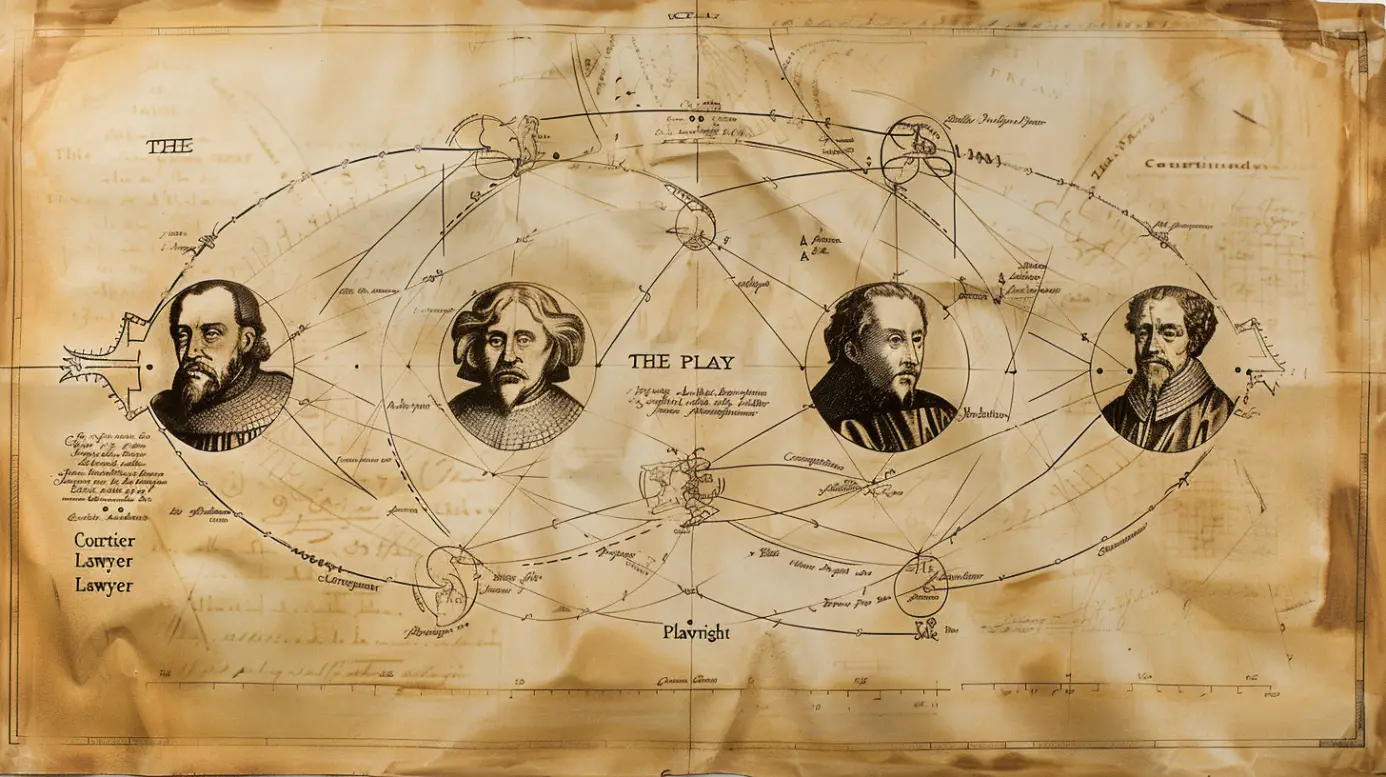
The Group Theory proposes that “William Shakespeare” was not a man, but a brand. It was the name used by a secretive consortium of brilliant individuals who pooled their unique knowledge and talents to create the plays.
This was not a fraud, but a practical solution to the social and political constraints of the Elizabethan era.
Edward de Vere, 17th Earl of Oxford
Role: The Courtier & Visionary
Contribution: Provided the intimate knowledge of aristocratic life, courtly politics, and the poetic flair. His documented travels in Italy explain the plays’ specific local details.
Sir Francis Bacon
Role: The Legal Philosopher
Contribution: Provided the structural genius, legal precision, and philosophical depth. His mind is evident in the complex trials and explorations of power.
Christopher Marlowe
Role: The Tragic Poet
Contribution: Provided the model for mighty blank verse and tragic ambition. His “death” in 1593 allowed his voice to be absorbed and evolved within the group.
William Shakespeare of Stratford
Role: The Theatrical Frontman
Contribution: A talented actor and sharp businessman who acted as the public face, managed the practicalities of production, and provided the legitimate cover story.
Why would such talented individuals hide their identities? The motive was powerful: social stigma and political safety.
Aristocratic Disgrace
For a nobleman like the Earl of Oxford, writing for the public stage was considered a vulgar, low-class trade—a scandal that could destroy his reputation at court.
Political Prudence
For a statesman like Francis Bacon, being publicly linked to plays that critiqued monarchy and courtly corruption would have been politically suicidal.
A Clean Slate
For Christopher Marlowe, faking his death freed him from charges of heresy and allowed his work to continue under a new, protected identity.
The Group Theory is not wild speculation. It is an inference to the best explanation, built on three pillars of evidence:
The Knowledge Problem
The plays contain expert-level knowledge their purported author could not have possessed.
The Biographical Problem
The historical record for Shakespeare of Stratford is devoid of the hallmarks of a literary life.
The Precedent of Collaboration
We know collaboration was common in Elizabethan theatre. The Group Theory simply applies this known practice to the core of the canon itself.
Why would such talented individuals hide their identities? The motive was powerful: social stigma and political safety.
The Group Theory is not wild speculation. It is an inference to the best explanation, built on three pillars of evidence:
Aristocratic Disgrace
For a nobleman like the Earl of Oxford, writing for the public stage was considered a vulgar, low-class trade—a scandal that could destroy his reputation at court.
Political Prudence
For a statesman like Francis Bacon, being publicly linked to plays that critiqued monarchy and courtly corruption would have been politically suicidal.
A Clean Slate
For Christopher Marlowe, faking his death freed him from charges of heresy and allowed his work to continue under a new, protected identity.
The Knowledge Problem
The plays contain expert-level knowledge their purported author could not have possessed.
The Biographical Problem
The historical record for Shakespeare of Stratford is devoid of the hallmarks of a literary life.
The Precedent of Collaboration
We know collaboration was common in Elizabethan theatre. The Group Theory simply applies this known practice to the core of the canon itself.